
As a core pillar industry safeguarding national energy security and industrial development, the petrochemical sector covers the full industrial chain including crude oil processing, olefin and aromatic hydrocarbon production, oil & gas storage and transportation, refinery catalysis, hydrocracking, oil blending and flare gas emission. It is a high-risk industry featuring continuous production, highly flammable and explosive substances, strong corrosive media and strict environmental compliance standards, demanding far higher precision, stability and reliability for gas analysis and monitoring equipment than general industries.
The entire petrochemical production process operates under extreme working conditions: high temperature, high pressure, high flow velocity, heavy dust and strong corrosion. Multiple gas media exist throughout production, including flammable and explosive gases (methane, ethane, hydrogen, liquefied petroleum gas, etc.), toxic and hazardous gases (carbon monoxide, hydrogen sulfide, VOCs, benzene series, chlorine, etc.), as well as oxygen and inert gases required for process reactions. Risks of gas leakage, excessive concentration and unbalanced process parameters persist across production, storage, transportation and emission links. Amid China’s energy sector transformation, tightened safety supervision and continuously upgraded environmental emission standards, drawbacks of traditional gas monitoring solutions have become prominent, forming major bottlenecks restricting long-term stable operation of petrochemical enterprises:
1. Extreme safety prevention pressure: Dense petrochemical facilities and complex pipeline networks mean even minor gas leaks may trigger catastrophic accidents including explosions, fires and personnel poisoning. Conventional monitoring equipment suffers from delayed response, insufficient explosion-proof ratings and weak anti-interference performance, failing to deliver all-weather, full-coverage real-time early warnings.
2. Insufficient precision for process control: In core processes such as catalytic cracking, hydrofining and rectification separation, gas composition and concentration directly determine reaction efficiency, product yield and energy consumption. Deviations in monitoring data cause excessive raw material loss, substandard product purity and elevated energy costs.
3. Rigorous environmental compliance requirements: Flare gas, plant tail gas and unorganized waste gas emissions must strictly comply with national environmental control standards. Lack of precise on-line monitoring easily leads to excessive emissions, resulting in production suspension for rectification and heavy fines.
4. Poor equipment adaptability: Standard gas analyzers cannot withstand extreme petrochemical operating conditions, prone to scaling, blockage and corrosion damage. They incur high post-operation maintenance costs and short service life, failing to meet long-term continuous on-line monitoring demands.
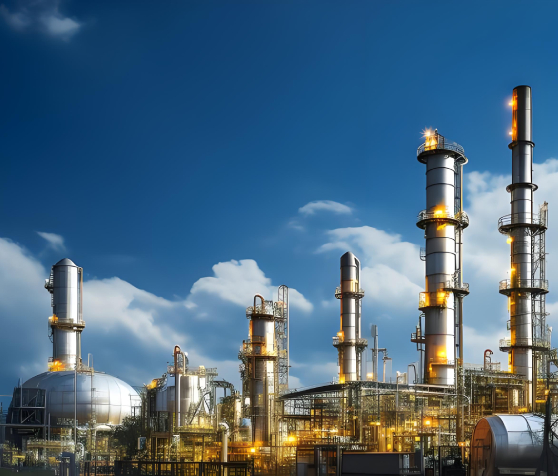

Large and medium-sized enterprises across metallurgy, petrochemical and thermal power industries regard boosting combustion efficiency, cutting energy consumption, reducing pollutant emissions and environmental protection as critical approaches to improving product quality and market competitiveness. Therefore, measuring and enhancing combustion efficiency of combustion equipment and identifying optimal combustion points are of vital importance, making oxygen analyzers widely applied throughout the petrochemical sector.
Take the integrated catalytic reforming unit as an example: Continuous Catalytic Reforming (CCR) is one of the major secondary processing technologies in petrochemical manufacturing. During production, catalysts require continuous regeneration to maintain activity and sustain normal reforming reactions. Measuring and monitoring oxygen concentration in regenerator flue gas serves as a key measure to guarantee catalyst regeneration performance. Sufficient oxygen is required to fully burn carbon deposits on catalyst surfaces; however, excessive oxygen triggers ultra-high temperatures that damage catalysts and even process equipment. Dedicated oxygen analyzers are therefore mandatory to strictly regulate oxygen levels in regeneration flue gas.
sales@gdcunzhi.com
Chengdu HonryTech Science and Technology Co., Ltd.

WeChat Official Account

Douyin Account
